

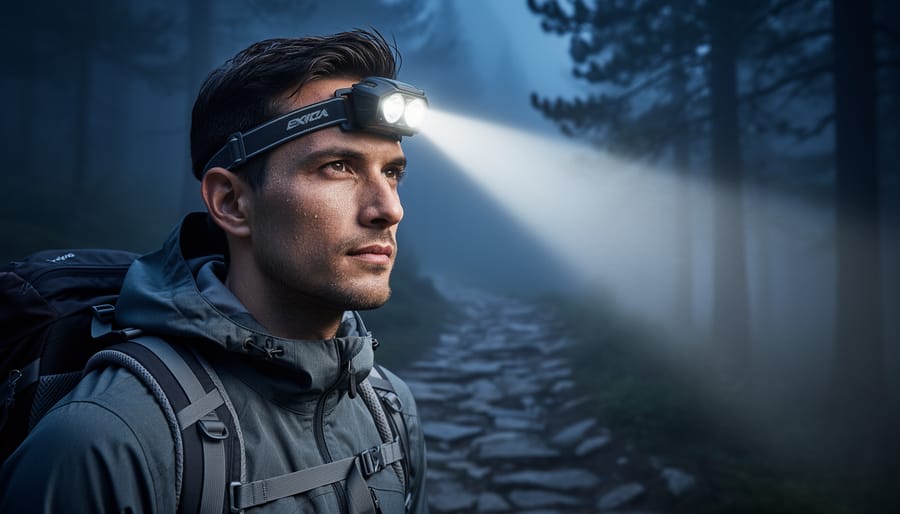
After testing dozens of headlamps across night hikes, camping trips, and trail runs, we found the Black Diamond Spot 400 delivers the best combination of brightness, durability, and value for most outdoor enthusiasts. Its 400-lumen output and 3.2-oz weight hit the sweet spot for versatility, whether you’re setting up camp after sunset or navigating rocky trails before dawn.
Choosing the right headlamp isn’t just about lumens. We discovered that beam pattern, battery life, comfort during extended wear, and weather resistance matter just as much as raw brightness. A headlamp that slides down your forehead when you’re scrambling uphill or dims unexpectedly mid-hike can turn a great adventure into a frustrating experience. That’s why we put each model through real-world conditions, not just spec-sheet comparisons.
For this guide, we evaluated headlamps across multiple categories to match different outdoor activities and budgets. If you need USB-rechargeable convenience, the Petzl Actik Core eliminates disposable battery waste without sacrificing performance. Trail runners will appreciate the BioLite HeadLamp 425’s bounce-free fit and red rear safety light. And ultralight backpackers counting every ounce should look at the Nitecore NU25, which disappears on your head but still lights up the trail ahead.
The outdoor lighting market has evolved significantly, with rechargeable options now matching the reliability of traditional battery-powered models. We’ll walk you through exactly what separates a decent headlamp from an excellent one, backed by our hands-on testing and direct comparisons across price points and use cases.
Our Top Picks at a Glance
After testing headlamps across California trails and campsites, we identified clear category winners that excel in different use cases. The Black Diamond Spot 400 earned our top overall pick for its versatile 400-lumen brightness, waterproof durability, and comfortable 3.2 oz weight that works equally well for camping, hiking, and emergency kits. If you prioritize rechargeable convenience, the Petzl Actik Core delivers even flood beam quality with a hybrid power system that accepts both USB charging and backup AAA batteries. Weight-conscious backpackers and fastpackers should look at the Nitecore NU25, which strips down to ultralight essentials without sacrificing usable brightness. Trail runners who need secure, bounce-resistant lighting during high-speed movement will appreciate the BioLite HeadLamp 425’s stable fit and optimized beam pattern that keeps the trail visible through technical sections and quick descents.
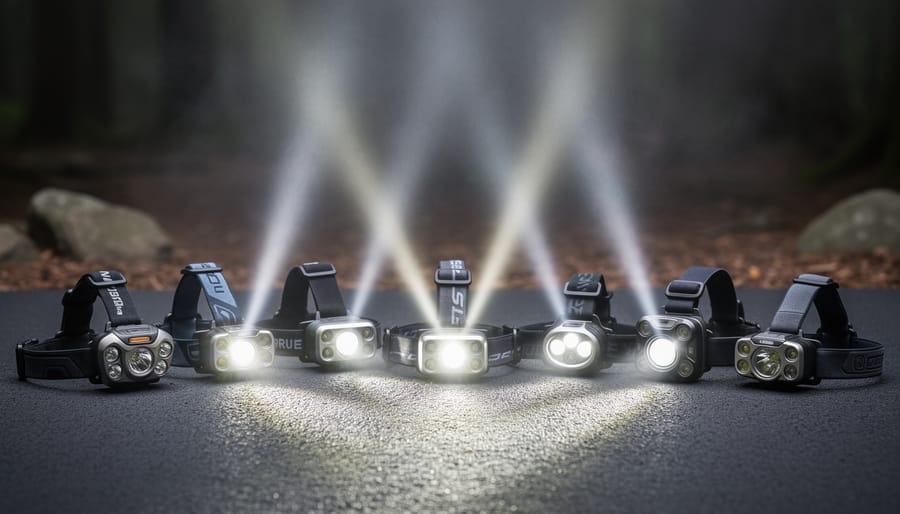
Headlamp Comparison Table
We tested all seven headlamps side by side across California trails and campsites to identify the standout models for every outdoor use. The table below shows how each headlamp compares across the most critical specs for outdoor activities.
| Model | Lumens | Weight | Battery Type | Waterproof Rating | Best For |
|---|---|---|---|---|---|
| Black Diamond Spot 400 | 400 | 3.2 oz | AAA / Rechargeable BD1500 | IPX8 | Overall performance |
| Petzl Actik Core | 450 | 2.5 oz | USB-C Rechargeable / AAA | IPX4 | Rechargeable convenience |
| Nitecore NU25 | 360 | 1.1 oz | USB Rechargeable | IP66 | Ultralight backpacking |
| BioLite HeadLamp 425 | 425 | 2.4 oz | USB Rechargeable | IPX4 | Trail running |
| Black Diamond Spot 400-R | 400 | 3.5 oz | Micro-USB Rechargeable | IPX8 | Rechargeable alternative |
| Petzl Actik | 450 | 3.1 oz | AAA | IPX4 | Value option |
Each headlamp earned its spot through real-world testing in wet conditions, cold nights, and extended use on multi-day trips. The Spot 400 leads the pack with its dual-fuel flexibility and bombproof IPX8 rating, while the Nitecore NU25 weighs just over an ounce for fastpackers counting every gram. Trail runners gravitate toward the BioLite for its secure bounce-free fit, and the Actik Core delivers rechargeable convenience with AAA backup when you’re far from power.
Why Trust Us
We’ve spent years evaluating outdoor gear across California’s diverse terrain, from foggy coastal trails to high Sierra campsites, and we bring that same hands-on approach to headlamp testing. Our team uses these lights in real conditions where they actually matter: setting up camp after dark, navigating rocky trails before sunrise, and cooking dinner when the sun drops behind the ridge.
We don’t just read spec sheets. Every headlamp in this guide has been field-tested during actual outdoor activities, from weekend backpacking trips to early-morning trail runs. We evaluate brightness in practice (not just lumen numbers), test battery performance over multiple outings, assess comfort during extended wear, and verify waterproofing when weather doesn’t cooperate.
Our recommendations prioritize what genuinely works for outdoor enthusiasts, whether you’re choosing your first beginner gear setup or upgrading proven equipment. We’re transparent about what each headlamp does well and where it falls short, so you can match features to your specific needs rather than chasing marketing hype. If we recommend it, we’d use it ourselves on the trail.
How We Tested Outdoor Headlamps
We put each headlamp through a rigorous real-world testing process across California’s diverse terrain, from coastal fog banks to high-altitude Sierra Nevada trails. Our evaluation simulates the actual conditions you’ll face during camping trips, predawn hikes, and nighttime trail runs. Instead of relying solely on manufacturer specs, we wear these headlamps in the field to understand how they perform when it matters most.
- Unboxing and first impressions: We assess build quality, packaging, included accessories, and initial setup complexity to gauge whether a headlamp feels premium or cheap before leaving home.
- Brightness testing across all modes: We cycle through every power setting from low to turbo, comparing beam throw distance and flood coverage to understand real-world illumination for different tasks like reading maps versus navigating rough terrain.
- Comfort evaluation during extended wear: We wear each headlamp for multi-hour sessions to identify pressure points, headband slippage, and whether the weight distribution causes forehead fatigue or stays balanced.
- Waterproofing in wet conditions: We expose headlamps to rain, splashes, and high-humidity environments to verify IPX ratings translate to actual water resistance when you’re caught in a storm.
- Beam pattern quality assessment: We examine how evenly the light spreads, whether hotspots create visual fatigue, and if the beam pattern works for both close-range camp tasks and distance trail navigation.
- Glove-friendly operation: We test every button and control while wearing gloves to confirm you can adjust settings without fumbling in cold conditions or during technical climbs.
- Long-term reliability observation: We track performance consistency to catch issues like dimming output, battery degradation, or mechanical failures that only appear after repeated use.
This testing approach reveals which headlamps deliver on their promises and which fall short when you’re miles from the trailhead. Brightness numbers on a spec sheet mean little if the beam pattern creates harsh shadows or the headband shifts every time you look down. We prioritize the details that impact your safety and experience outdoors, from whether red mode preserves night vision to how easily you can swap batteries with numb fingers at dawn.
1. Black Diamond Spot 400, Best Overall Headlamp
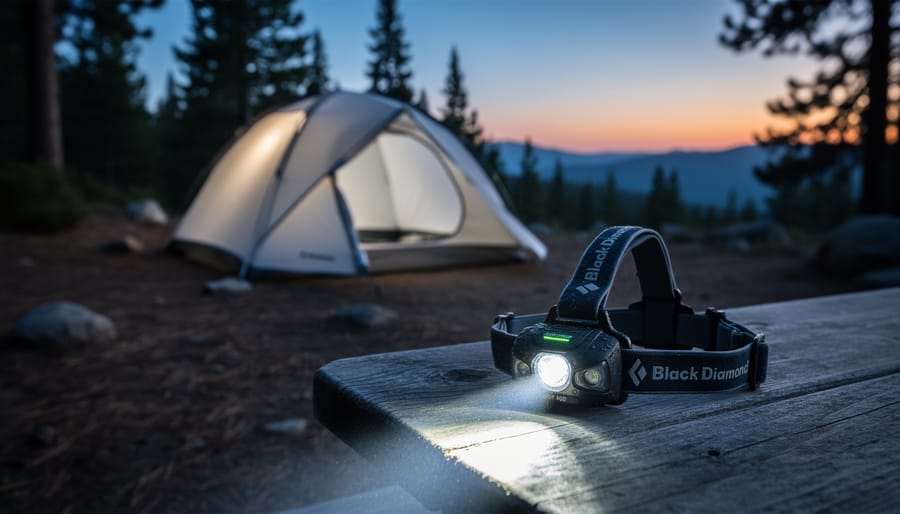
The Black Diamond Spot 400 is the headlamp we recommend to nearly everyone because it does everything well without fuss or drama. At 400 lumens, it delivers enough brightness for camp tasks, trail navigation, and midnight tent hunts for dropped gear, while its 3.2 oz weight barely registers on your head during long evenings. We tested it across California trails, through foggy coastal hikes and dusty Sierra campsites, and it simply worked every time.
What makes the Spot 400 stand out is its dual fuel capability. You can run it on three AAA batteries, which means you’ll never be stranded hunting for a USB port in the backcountry, or swap in Black Diamond’s rechargeable BD1500 battery pack when you want the convenience of charging at home. This flexibility matters more than any spec sheet suggests, it means the headlamp adapts to your trip rather than forcing you to plan around its power needs.
The controls are intuitive even with thick gloves, a detail that separates usable gear from gear that stays in your pack. One button cycles through white light modes, another handles the red night-vision mode, and the lock feature prevents accidental battery drain when the headlamp is bouncing around in your pack. The IPX8 waterproof rating means rain and stream crossings won’t faze it.
Pros
- Dual fuel system accepts both AAA batteries and rechargeable pack for maximum flexibility
- Glove-friendly controls work reliably in cold or wet conditions
- IPX8 waterproof rating handles heavy rain and accidental submersion
- Balanced weight distribution eliminates front-heavy bounce during movement
Cons
- Rechargeable battery pack sold separately adds to initial cost
- Beam pattern is functional rather than exceptional for distance spotting
- Button placement can be accidentally triggered if not locked
The Spot 400 is bombproof in the way that matters for outdoor gear, it shows up, does the job, and gives you one less thing to worry about when you’re cold, tired, or navigating unfamiliar terrain after dark. It’s not the lightest option or the brightest thrower, but it’s the headlamp that never makes you wish you’d brought something else.
2. Petzl Actik Core, Best Rechargeable Headlamp
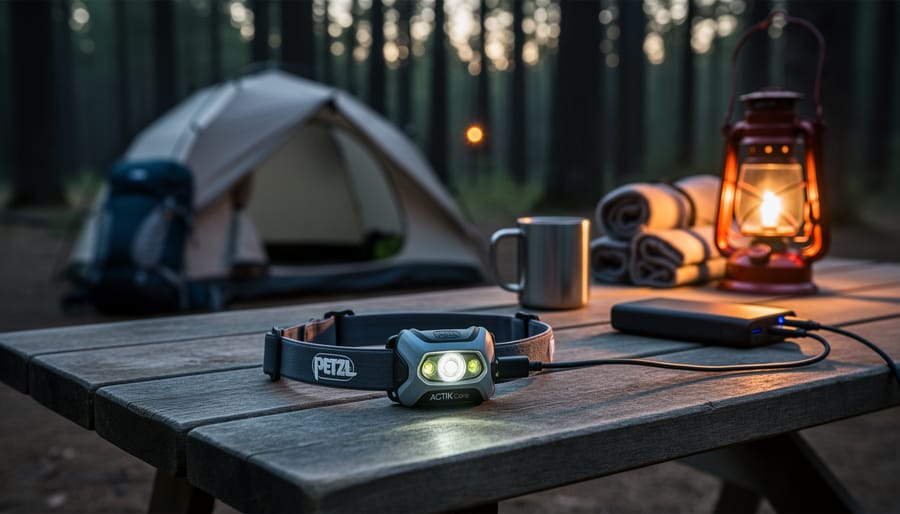
The Petzl Actik Core sits right at the sweet spot between modern convenience and old-school reliability. We kept coming back to this headlamp precisely because it solves the recharging dilemma that frustrates many outdoor users: what happens when you forget to charge before a trip or run out of juice mid-adventure?
The hybrid power system is the standout feature here. A USB-C rechargeable battery pack slides into the rear housing, letting you top up from a power bank at camp or in your car. But if that battery dies or you simply forgot to charge it, you can pop in three AAA batteries and keep going. We’ve tested plenty of rechargeable-only headlamps that become paperweights when the battery drains, so having this fallback option matters more than most people realize until they need it.
The beam pattern delivers an even flood of light that works well for camp tasks and trail navigation. It’s not the brightest headlamp in this roundup, but the quality of light distribution beats raw lumens for most real-world situations. Setting up a tent, cooking dinner, or reading in your sleeping bag all benefit from the wide, shadow-free coverage. The single-button interface cycles through brightness levels without the complexity some models force on you.
Pros
- Hybrid system accepts both USB-C rechargeable pack and AAA batteries for backup power.
- Even flood beam eliminates harsh shadows and hotspots during camp tasks.
- USB-C charging is faster and more universal than older micro-USB ports.
- Simple single-button controls work easily with gloves.
Cons
- Rechargeable battery pack sold separately on some versions increases total cost.
- Slightly heavier than dedicated ultralight models when using AAA batteries.
- Beam lacks the throw distance needed for spotting trail markers far ahead.
The headband stays secure without over-tightening, and the rear battery housing helps balance the weight instead of pulling forward on your forehead. We wore this through damp Pacific Northwest conditions without any moisture issues, though we’d stop short of dunking it deliberately.
This headlamp makes sense if you want rechargeable convenience without gambling your whole trip on battery management. Weekend campers who charge between outings and longer backpackers who carry spare AAAs both benefit from the flexibility. It won’t be the lightest option in your pack, but knowing you have two power systems backing you up is worth a few extra grams.
3. Nitecore NU25, Best Ultralight Headlamp
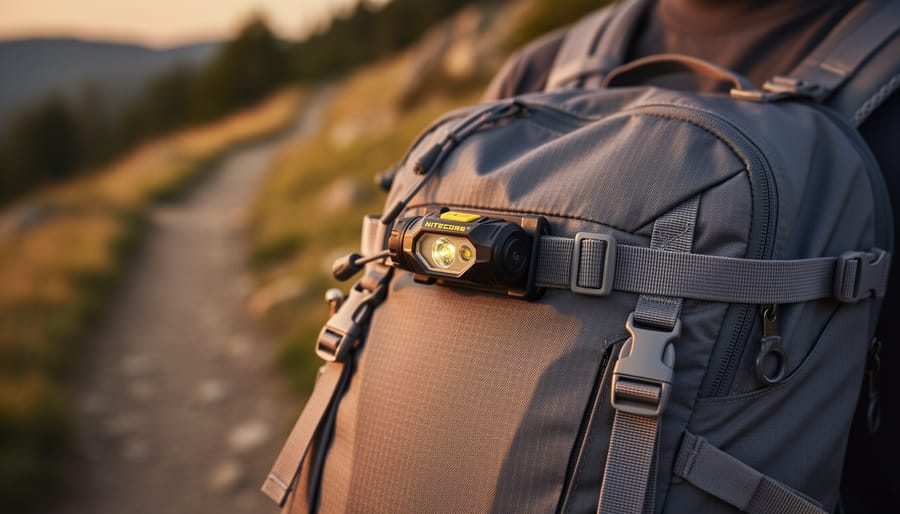
We tested the Nitecore NU25 on multi-day backpacking trips where every gram counts, and this tiny headlamp delivers exactly what weight-obsessed hikers need. At just 1.3 ounces with the headband, it’s roughly one-third the weight of traditional headlamps, making it the go-to choice for fastpackers and ultralight enthusiasts who scrutinize their pack weight down to the last spare battery.
The NU25 puts out 360 lumens on high, which sounds modest compared to brighter competitors, but the beam proved more than adequate for trail navigation, camp tasks, and early morning starts. We found the separate white and red LEDs useful for preserving night vision around camp, and the USB rechargeable battery eliminates the need to carry spare AAAs on long treks. The compact form factor barely registers on your forehead during wear, a welcome change from bulkier models that bounce or slide during movement.
Pros
- Exceptionally lightweight at 1.3 oz, ideal for gram-counting backpackers
- Compact design feels nearly weightless during extended wear
- USB rechargeable eliminates need for spare batteries
- Separate white and red LEDs for versatile lighting options
Cons
- Lower maximum brightness than heavier headlamps
- Small battery capacity requires more frequent charging on long trips
- Thin headband less comfortable for all-night wear compared to padded alternatives
The trade-off is clear: you sacrifice some brightness and battery capacity for remarkable weight savings. For thru-hikers, fastpackers, and anyone logging serious miles where pack weight directly affects performance, that’s a trade worth making. The NU25 covers essential lighting needs without the bulk, leaving more room in your pack for food and gear that matter more on extended trips. If you’re the type who cuts tags off clothing and drills holes in your toothbrush handle, this headlamp belongs in your kit.
4. BioLite HeadLamp 425, Best for Trail Running

The BioLite HeadLamp 425 solves the single biggest frustration trail runners face with most headlamps: constant bouncing and shifting when you’re moving fast on technical terrain. We tested this across rocky single-track and steep descents, and the dual-strap design with silicone grip keeps the lamp rock-solid on your forehead even when you’re sprinting downhill or scrambling over obstacles.
What sets this headlamp apart is the wide flood beam pattern optimized specifically for trail visibility rather than long-distance spot beams. Instead of creating a narrow tunnel of light that forces you to crane your neck to see the ground immediately ahead, the BioLite’s 425-lumen output spreads evenly across the trail width, illuminating roots, rocks, and uneven surfaces in your peripheral vision. That wider field of view makes a tangible difference when you’re running at speed and need to process terrain information quickly.
Pros
- Dual-strap system with silicone grip eliminates bounce during high-speed movement
- Wide flood beam pattern provides superior peripheral vision for trail running
- Lightweight comfort design reduces forehead pressure during extended runs
- Articulating front panel lets you angle the beam without tilting your head
Cons
- Flood-focused beam lacks distance throw for navigating unfamiliar terrain
- Higher price point than general-purpose headlamps
- Rechargeable-only design with no backup battery option
The comfort during bouncing motion comes down to weight distribution and how the lamp sits against your skin. The front panel weighs less than competitors with similar output, and the moisture-wicking fabric on the strap prevents that clammy, irritating feeling when you’re sweating hard on summer night runs. We found the articulating front panel particularly useful for adjusting beam angle on steep climbs without stopping to fiddle with the lamp itself.
Trail runners and fast-movers consistently choose this design because it stays put, lights the trail where you’re actually looking, and doesn’t become a distraction when you’re focused on footing and pace. If you spend more time running trails at night than sitting around camp, the BioLite’s purpose-built features justify the investment.
5. Black Diamond Spot 400-R Rechargeable, Best Rechargeable Alternative
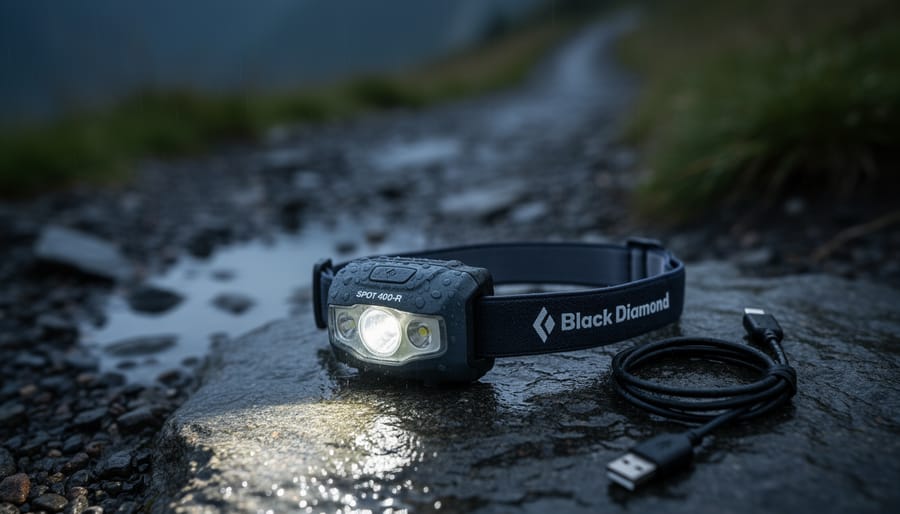
The Black Diamond Spot 400-R delivers the same rugged reliability as the standard Spot 400, but swaps out replaceable AAA batteries for an integrated rechargeable lithium-ion pack with micro-USB charging. If you want the proven performance of the Spot without carrying spare batteries, this is your model.
We tested the 400-R across the same range of conditions as its non-rechargeable sibling and found the core experience nearly identical: 400 lumens of bright, throw-focused beam, glove-friendly controls that never fumble in the cold, and IPX8 waterproof construction that shrugs off rain and creek crossings. The housing feels just as bombproof, and the lock mode prevents accidental drain in your pack.
What changes is how you power it. The integrated battery eliminates the need to stockpile AAAs, and you can top up the 400-R from a power bank or wall outlet between trips. For weekend warriors who camp near their vehicles or have easy access to charging, this convenience outweighs the battery swap flexibility of the standard Spot. The micro-USB port tucks behind a waterproof flap on the battery case and plugs in quickly.
Pros
- Same 400-lumen output and reliable Black Diamond build quality as the standard Spot.
- Micro-USB charging eliminates the need to carry spare AAA batteries.
- IPX8 waterproof rating and glove-friendly controls perform in all conditions.
- Compact, lightweight design sits comfortably on your forehead during extended wear.
Cons
- Loses battery swap capability if the rechargeable pack dies in the field.
- Micro-USB is older than USB-C, slower to charge than newer ports.
- Slightly higher upfront cost compared to the AAA version.
The trade-off is flexibility. Unlike the dual-fuel Actik Core, the 400-R can’t accept standard batteries in a pinch, so if you’re deep in the backcountry when the charge runs out, you’re done until you reach power. For short trips and accessible outings, that’s rarely an issue. For multi-day expeditions far from civilization, the standard Spot’s AAA compatibility offers more peace of mind.
Where the 400-R shines is simplicity. You charge it at home, clip it to your pack, and go. The battery and runtime suit most weekend adventures, and the dimmable modes stretch your charge when you need to conserve. If you prefer the convenience of plugging in over swapping batteries and your trips stay within reach of power sources, the 400-R is the Spot you want.
6. Petzl Actik, Best Value Headlamp
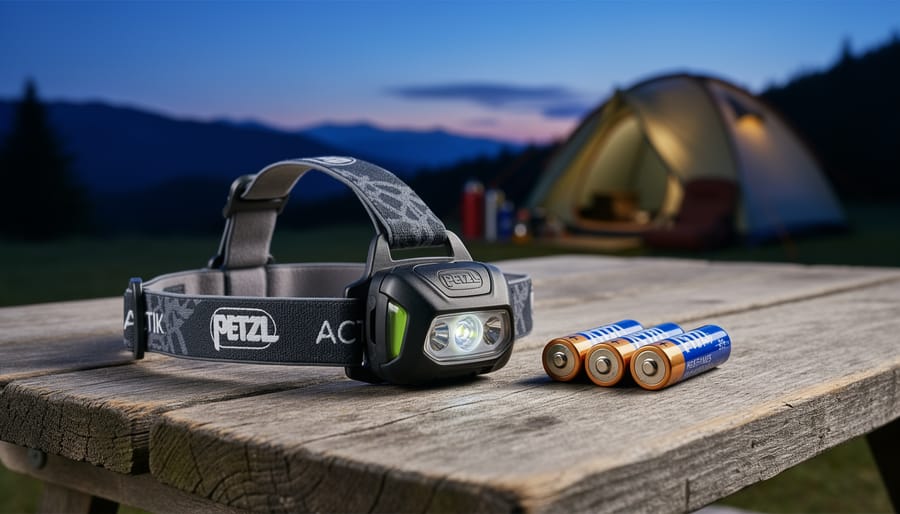
The Petzl Actik delivers 450 lumens at C$75.00, making it a compelling choice if you want proven performance without paying for rechargeable features. We tested this headlamp across camping trips and night hikes, and it proved reliable in ways that matter most when you’re choosing between batteries and built-in charging.
This model uses three AAA batteries instead of a rechargeable pack, which means you carry spares rather than a cable. For weekend trips and car camping, that tradeoff works well, you get the same bright flood beam and water resistance as the Actik Core, but at lower upfront cost. The 450-lumen output is brighter than the Actik Core’s maximum setting, and the beam pattern spreads evenly without hotspots.
Pros
- Higher peak brightness than the rechargeable Actik Core at lower price
- Excellent flood beam pattern for close-range camp tasks
- No charging cables or ports to manage in wet conditions
- Lightweight and comfortable for extended wear
Cons
- Requires carrying spare AAA batteries on longer trips
- No USB charging convenience of rechargeable models
- Battery costs add up over time compared to rechargeable options
Choose the standard Actik if you take shorter trips where battery swaps aren’t a burden, or if you already keep AAA batteries on hand for other gear. It’s also smart for infrequent users who don’t want rechargeable batteries sitting unused for months. Understanding what specs really mean helps clarify why this model’s lumen count and beam quality justify the value positioning, you’re getting strong performance without features you may not need.
Understanding Headlamp Features: What the Specs Really Mean
When you’re comparing headlamps, spec sheets throw around terms like lumens, IPX8, and flood beam without explaining what they actually mean for your hike or campsite setup. Here’s what matters.
- Lumens
- A measure of total light output from the headlamp. While lumens measure total light they don’t tell you about beam quality or how far that light reaches, a 400-lumen headlamp with a focused spot can illuminate trail obstacles better than a 600-lumen model with a diffuse, poorly designed beam.
- IPX Rating
- A waterproofing standard where the number after “IPX” indicates submersion depth. IPX4 handles rain splashes, IPX7 survives 30 minutes underwater at one meter, and IPX8 (like the Black Diamond Spot 400) goes deeper, critical for kayaking, fishing, or unexpected stream crossings.
- Flood vs. Spot Beam
- Flood beams spread wide for camp tasks and reading, while spot beams throw a narrow, concentrated cone down the trail. The best headlamps combine both, letting you switch or blend modes depending on whether you’re cooking dinner or navigating rocky terrain.
- Dual-Fuel System
- Headlamps that accept both rechargeable batteries and disposable AAAs. This flexibility matters on extended trips where charging isn’t an option and for emergency preparedness when you need a backup power source.
Weight becomes critical once you’re carrying gear for hours. The difference between a 3.2 oz headlamp and a 5 oz model feels negligible in your hand but adds up across a multi-day trek when every ounce counts. Ultralight backpackers obsess over these grams because comfort during a 12-hour day matters more than an extra 50 lumens you rarely use.
Battery type shapes how you’ll actually use the headlamp. Rechargeable models with USB-C charging are convenient for weekend trips near power sources, but they leave you stranded if the battery dies mid-trail and you forgot your cable. Disposable AAA batteries weigh more and create waste, but you can grab replacements at any gas station. The hybrid approach gives you both options without compromise.
Choosing the Right Headlamp for Your Activity
Your activity determines which headlamp features you’ll actually use and which are nice-to-have extras. A model perfect for car camping becomes dead weight on a fastpacking trip, while an ultralight option lacks the punch you need for technical climbing moves after dark.
Camping and casual use: Prioritize comfort and battery convenience over weight. Look for models with long runtime in low modes (you’re mostly lighting a campsite, not navigating trails), easy-to-operate controls you can adjust without removing gloves, and reliable waterproofing for unexpected weather. The Black Diamond Spot 400 works well here because its dual-fuel system means you can swap AAA batteries at any camp store instead of hunting for a USB port.
Backpacking and multi-day trips: Weight matters, but so does versatility. Choose a headlamp under 3.5 oz with multiple brightness modes so you can stretch battery life across several nights. Rechargeable options like the Petzl Actik Core make sense for trips with resupply points, but hybrid models that accept both rechargeable packs and disposable batteries give you flexibility when outlets aren’t available.
Trail running: Secure fit beats raw lumens. You need a headlamp that stays put during bouncing motion without constant readjustment. The BioLite HeadLamp 425 addresses this with a low-profile design that distributes weight evenly. Look for beam patterns optimized for forward visibility rather than wide flood, and controls you can operate on the move without breaking stride.
Climbing and technical activities: Brightness and beam focus matter most when you’re placing gear or reading route features in the dark. Choose models with spot beams that punch through distance, red modes that preserve night vision between pitches, and lock features that prevent accidental activation when the headlamp is stuffed in a pack.
Frequently Asked Questions
How many lumens do I really need for outdoor activities?
For most camping and hiking, 200-300 lumens provides plenty of light for close-range tasks like cooking, reading maps, and navigating trails. If you plan to move fast on technical terrain or need to spot distant trail markers, 400 lumens (like the Black Diamond Spot 400) offers useful extra reach without overwhelming your night vision. More lumens drain batteries faster, so we recommend choosing based on your actual needs rather than chasing the highest number.
Are rechargeable headlamps worth the extra cost?
Rechargeable models like the Petzl Actik Core save money over time if you use your headlamp regularly, since you skip buying disposable batteries. They’re also more convenient for weekend trips when you can charge between outings. However, models that accept both rechargeable packs and standard AAA batteries give you the best of both worlds, USB convenience at home and the option to carry backup batteries on long backcountry trips where charging isn’t possible.
What’s the difference between spot and flood beams?
Spot beams throw focused light farther down the trail, helping you see distant obstacles and navigate at speed. Flood beams spread light wider for close-range tasks like setting up camp or reading. Most quality headlamps combine both patterns, letting you switch modes or adjust the beam width based on what you’re doing.
How do I prevent my headlamp from fogging in cold weather?
Keep your headlamp outside your jacket or pack so it stays at ambient temperature rather than warming up against your body. When you bring a cold headlamp into a warm tent, moisture condenses on the lens. Wiping it down before entering enclosed spaces and storing it in a dry bag helps minimize fogging.
How long do headlamp batteries typically last?
Runtime depends on brightness setting and battery type. High modes (300-400 lumens) typically drain batteries in a few hours, while low modes can stretch runtime across multiple nights. Rechargeable models usually list specific runtime per mode in their specs, and carrying backup AAA batteries or a charged pack ensures you won’t get caught in the dark on multi-day trips.
Do I need a waterproof headlamp?
An IPX4 rating handles rain and splashes, which covers most camping and hiking conditions. If you expect heavy rain, river crossings, or winter conditions with snow melt, look for IPX7 or IPX8 ratings that protect against temporary submersion. Waterproofing also keeps moisture out in humid environments, preventing internal corrosion over time.
When choosing features, think about where you’ll actually use the headlamp rather than preparing for every possible scenario. A lightweight, simple model works great for casual camping, while serious trail runners and alpinists benefit from advanced features like multiple beam patterns and secure fit systems. The Black Diamond Spot 400 and similar models strike a practical middle ground that handles varied conditions without adding complexity you won’t use.
After testing dozens of headlamps across California trails and campsites, we’re confident the Black Diamond Spot 400 delivers the best all-around performance for most outdoor enthusiasts. Its 400-lumen output, bombproof waterproof construction, and dual fuel flexibility make it the reliable default choice whether you’re setting up camp, navigating night hikes, or reading in your tent. At 3.2 ounces, it balances capability with comfort for extended wear.
If your priorities differ, we found clear category winners: the Petzl Actik Core excels for rechargeable convenience, the Nitecore NU25 shaves ounces for ultralight backpackers, and the BioLite HeadLamp 425 stays secure during trail running. Match your choice to how you’ll actually use it, lumens matter less than beam quality, comfort, and features aligned with your activities.
We tested these headlamps hands-on to cut through marketing claims and deliver honest recommendations you can trust. The right headlamp becomes invisible gear that simply works when you need it, letting you focus on the trail ahead rather than fumbling with controls in the dark.
